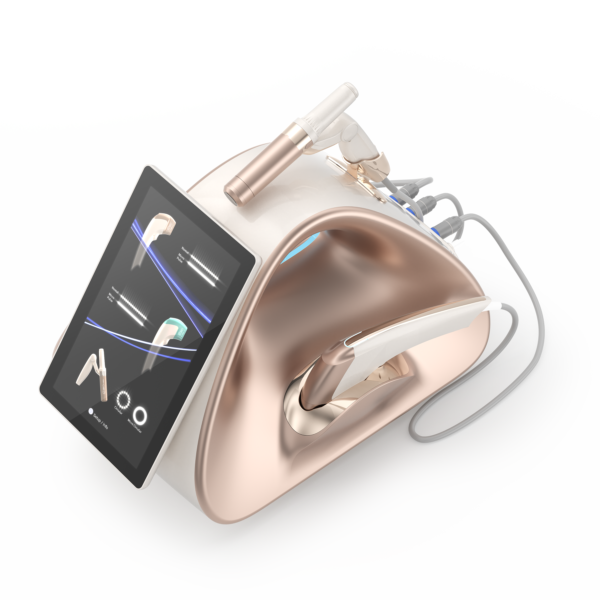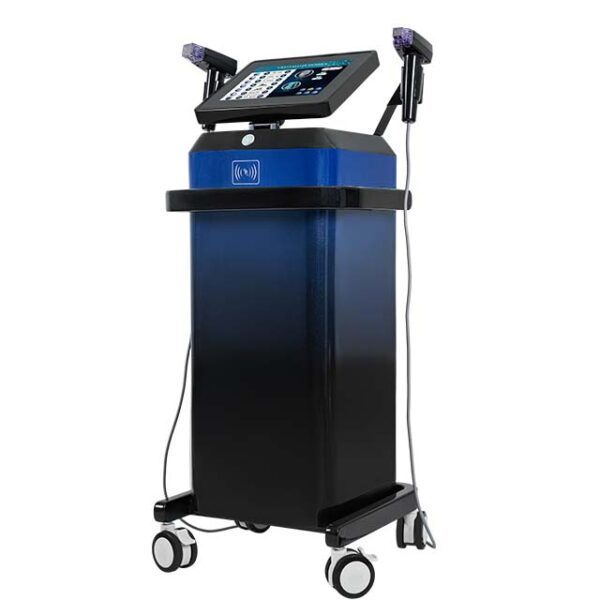
In today’s era of rapid advancements in medical aesthetics, non-surgical firming and anti-aging techniques have become core offerings for major beauty salons and medical aesthetic institutions. Among these, HIFU focused ultrasound lifting technology and radiofrequency microneedling systems are two of the most popular devices on the market.
Many professional aestheticians and aesthetic clinic owners often ask:
“Which one should I choose? Which one works best?”
In fact, from a professional perspective, these two devices aren’t in competition. Rather, they offer two high-end anti-aging and skin-tightening solutions, each with its own unique energy technology and intended for different target audiences.
Let’s analyze the differences and advantages of each from a beautician’s perspective.
1. Different Principles: Ultrasound vs. Radiofrequency Microneedling
HIFU: Focused Ultrasound Precision Lifting
HIFU uses focused ultrasound technology to apply energy directly to the SMAS fascia (approximately 4.5mm). Through “point heating,” it creates coagulation points within the tissue, stimulating collagen contraction and reorganization, achieving facial lifting, firming, and wrinkle reduction.
* Its greatest advantages are:
Non-invasive treatment with no downtime;
Layer-by-layer lifting, precise energy delivery to varying depths (1.5mm to 13mm);
Suitable for localized tightening of the face, neck, and body;
No downtime required, allowing immediate return to daily activities.
Suitable for:
Younger individuals (25-45 years old) experiencing mild sagging and seeking to maintain contours.
Radiofrequency microneedle deep activation regeneration
The RF Microneedling system uses 24 or 40 gold-plated microneedles to penetrate the skin and release energy into the dermis and fat layer (depth 1~4mm) at the same time, achieving multiple effects such as firming, wrinkle removal, acne scar removal, and improvement of skin texture and skin tone.
* Its advantages include:
Dual action: Microneedle stimulation + radiofrequency heating for comprehensive skin structural repair;
Controllable energy levels: From the epidermis to the fat layer, the depth can be freely adjusted;
Significantly improves skin texture, significantly reducing enlarged pores, acne scars, and sagging skin;
Long-lasting collagen regeneration effects, lasting up to 12-18 months after surgery.
* Suitable for:
Those experiencing noticeable skin sagging, enlarged pores, dull skin, noticeable acne scars, and those seeking full-thickness anti-aging and skin rejuvenation.
2. Differences in Treatment Experience and Recovery Period
| project | HIFU | RF microneedle |
| Treatment comfort | Energy is focused on deep tissues, with almost no damage to the surface | There is a microneedle puncture feeling, the energy is more concentrated but adjustable |
| recovery period | Non-invasive, no downtime, can be applied immediately | 1-3 days of slight redness or needle marks |
| pain | Mild tingling sensation, high tolerance | Intensity is controllable and can be adjusted according to skin tolerance |
| The effect appears | There is an immediate lifting sensation after treatment, and collagen reconstruction takes 4-6 weeks | Skin texture is significantly improved after 1 week, and firming effect is noticeable after 2-3 times |
3. Differences in Effect Direction and Target Population
| Functional goals | More suitable for HIFU | More suitable for radiofrequency microneedling |
| Facial Contouring | ✅ Strengths | ✔ Assistive |
| Fascial layer lifting | ✅ Deep SMAS focus | ✔ Mid-layer heating |
| Improves skin texture, pores, and acne scars | ⚪ General | ✅ Significant |
| Overall facial firming | ✅ | ✅ |
| Improves skin tone and fine lines | ✔ Maintenance | ✅ Regenerative |
| Partial body contouring | ✅ (Wide probe coverage) | ✔ (Can improve sagging) |
4. From the perspective of market and customer demand
The global high-end beauty market currently exhibits clear trends:
Younger clients (ages 25-40) prefer HIFU, seeking “natural lifting” and “instant firming.”
Mature clients (ages 35 and above) prefer radiofrequency microneedling machines, seeking “skin texture improvement,” “deep anti-aging,” and “overall rejuvenation.”
Radiofrequency microneedling machines, with their high repurchase rates and short treatment cycles, are extremely popular in the European and American markets and among mid- to high-end spas.
Due to their controllable depth and repeatability, more and more aestheticians are making them a staple in their salons, creating a complementary treatment with HIFU that can both tighten fascia and rebuild skin structure.
5. Recommendations
As a professional aesthetician, I always believe:
“The best equipment isn’t the most expensive, but the one that best suits the client’s skin type and the treatment they’re considering.”
If your clientele is younger and seeking immediate firming and lifting results, then HIFU is an excellent choice.
However, if your clientele has higher demands for skin texture improvement, pore and acne scar reduction, or deeper anti-aging.
Or if they desire triple improvements of “firming, smoothing, and refinement” in a single treatment, then the Radiofrequency Microneedling System will be more practical and competitive.It not only provides anti-aging and firming, but also improves skin texture, creating a more comprehensive and long-lasting rejuvenation management system.
6.Conclusion: The best choice is the one that suits you.
HIFU and RF microneedling are not mutually exclusive, but rather complementary technologies.
When choosing equipment, beauty salons should consider their clients’ age group, skin concerns, project portfolio, and market positioning.
For aestheticians: The Radio frequency microneedle represents the future of “comprehensive anti-aging + skin resurfacing.”
For clients: Choosing the right machine is the key to sustained reputation and revenue growth.